Guide
High vs low blood sugar symptoms: what to look for and when to get help
The common signs of high and low blood sugar, why symptoms are not a diagnosis, everyday habits that support steadier blood sugar, and when to see a doctor.
A note before we start
Every Age Health is an authorised Wellous dealer. This is general information, not medical advice, and a supplement is not a treatment for diabetes or any condition. If you are worried about your blood sugar, see a doctor.
High vs low blood sugar: the common signs
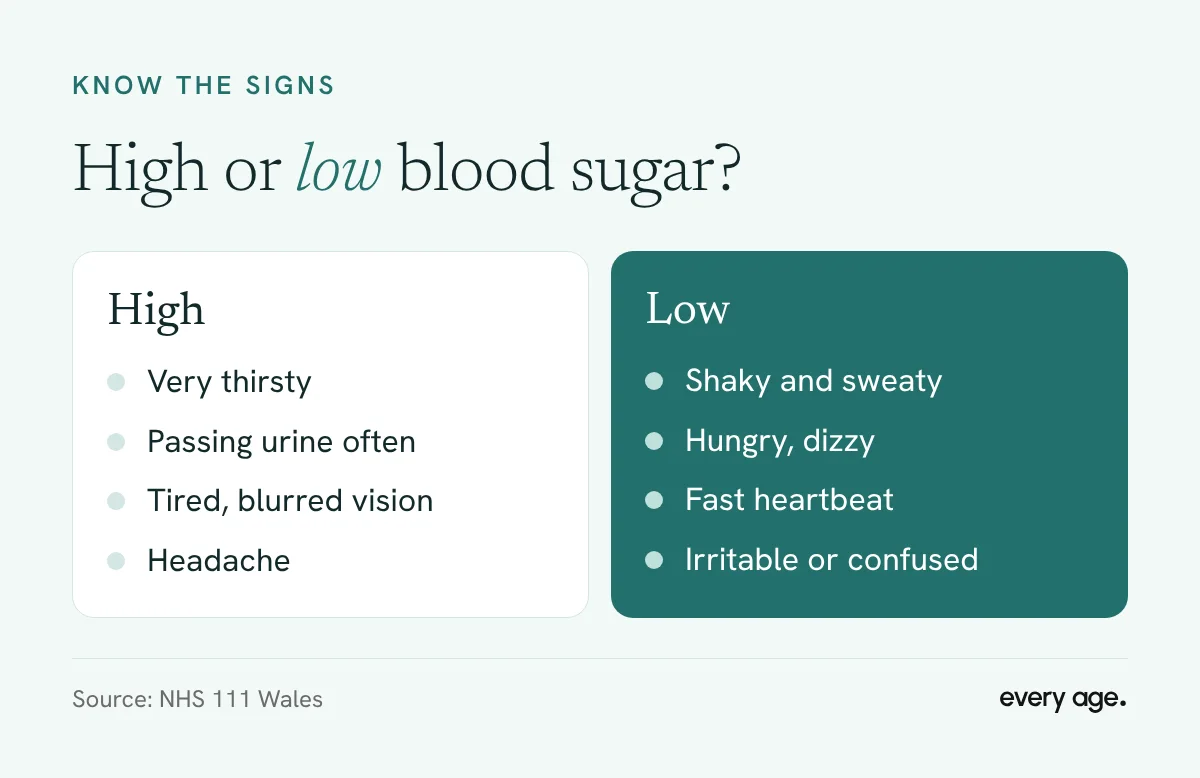
These lists cover the most commonly described signs. Not everyone has all of them, and some people have none.
- High blood sugar (hyperglycaemia): very thirsty, passing urine often, feeling tired, blurred vision, headaches
- Low blood sugar (hypoglycaemia): shaky or sweaty, hungry, dizzy, a fast or pounding heartbeat, irritable, and in severe cases confused
Symptoms are not a diagnosis
Tiredness, thirst and headaches have many everyday causes, from poor sleep to dehydration. Only a blood test (fasting glucose or HbA1c) can show your level. Our guide to normal blood sugar levels in Malaysia explains how those results are read.
When to get help
- Urgent help: confusion, fainting, a seizure, or if someone with diabetes cannot take sugar by mouth
- See a doctor soon: these signs keep returning, or you often feel very thirsty and tired
- If you have diabetes: follow the plan your doctor gave you and never change your medicine because of a supplement
Everyday habits that support steadier blood sugar
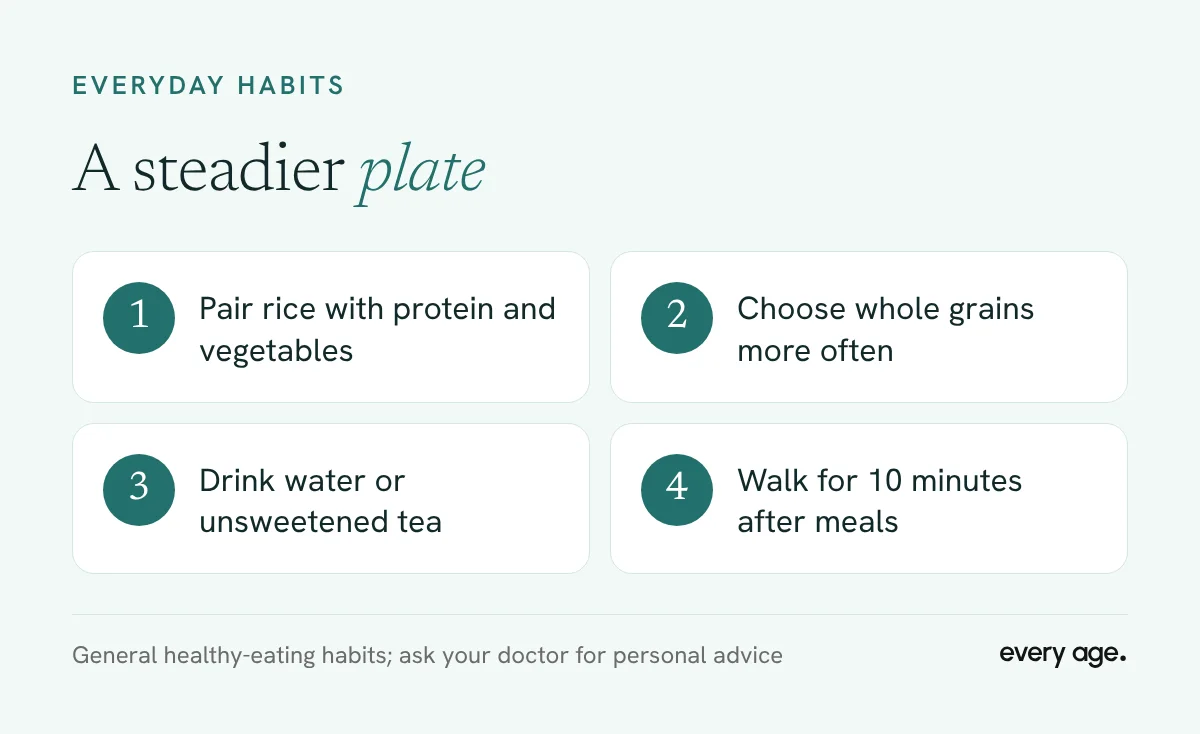
A healthy lifestyle supports steady blood sugar for most adults:
- Pair rice and noodles with protein and vegetables
- Choose whole grains more often than white rice
- Swap sweet drinks for water or unsweetened tea
- A 10-minute walk after meals
- Sleep enough and keep a healthy weight
Where supplements fit
Some people add a supplement to a healthy routine. GL Pro Core is a Korean red ginseng shot with banaba leaf and bitter melon, zero sugar, taken once a day with a meal; see GL Pro Core and Korean red ginseng and blood sugar. We also carry EvenOn, a botanical beverage mix from Immority; read what is inside EvenOn and how to take it, or see the EvenOn page for the current status.
These are food supplements that support healthy blood sugar as part of a healthy diet, not medicines. If you take diabetes medicine, ask your doctor before starting any supplement.
Gejala gula darah tinggi dan rendah (ringkasan dalam Bahasa Melayu)
Gula darah tinggi boleh menyebabkan dahaga melampau, kerap kencing, keletihan, penglihatan kabur dan sakit kepala. Gula darah rendah boleh menyebabkan menggigil, berpeluh, lapar, pening dan jantung berdegup laju. Gejala bukan diagnosis; hanya ujian darah boleh menunjukkan paras anda. Dapatkan bantuan segera jika anda keliru, pengsan atau sawan.
Frequently asked questions
What are the symptoms of high blood sugar?
Common signs are strong thirst, passing urine often, tiredness, blurred vision and headaches. Only a blood test can show your level.
What are the symptoms of low blood sugar?
Common signs are shakiness, sweating, hunger, dizziness, a fast heartbeat and irritability. Severe cases can cause confusion, fainting or seizures and need urgent help.
Can symptoms alone tell me if I have diabetes?
No. Symptoms have many causes and some people have none. A blood test such as fasting glucose or HbA1c is needed.
When should I see a doctor?
See a doctor if the signs keep returning or you are often very thirsty and tired. Get urgent help for confusion, fainting or a seizure.
Can a supplement treat high or low blood sugar?
No. Supplements such as GL Pro Core support healthy blood sugar as part of a healthy diet; they are not medicines. Ask your doctor if you take diabetes medicine.
Products in this article
Keep reading
Sources
- NHS 111 Wales: Hyperglycaemia (high blood sugar)
- NHS 111 Wales: Hypoglycaemia (low blood sugar)
- GL Pro Core product information (Jung Kwan Jang)
This article is general information, not medical advice. Wellous products are functional foods and supplements, not medicines. Consult your doctor if you are pregnant, nursing, take medication or have a medical condition.
All articles