Ingredients
Gymnema, mulberry leaf, banaba and bitter melon: what to know about plant ingredients for blood sugar support
Four plant ingredients often found in blood sugar supplements, explained honestly: what each is, what research shows so far, and who should check with a doctor first.
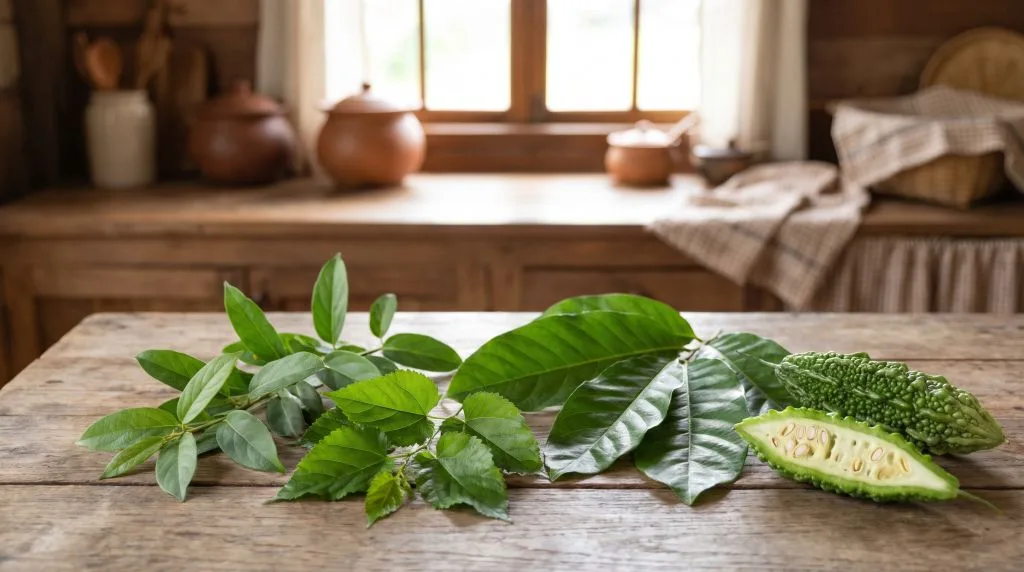
Why people look at plant ingredients
After a reading above the normal range, many people ask whether a supplement can help. Plant ingredients are popular because several of them have a long history in traditional use. A food supplement is not a medicine: it does not treat or cure diabetes, and food choices, movement, sleep and your doctor’s plan matter far more.
This guide explains four ingredients you will see on labels, in plain English, using reference sources rather than marketing claims. If you want the numbers first, see our guide to normal blood sugar levels in Malaysia.
Gymnema (Gymnema sylvestre)
Gymnema is a climbing vine native to parts of Asia, Africa and Australia. Its leaves have long been used in traditional medicine, and they contain gymnemic acids. It is sold as powders, capsules and teas.
The U.S. National Library of Medicine’s LiverTox says laboratory and animal studies show glucose-lowering effects, but human studies are small and short-term with varied preparations, and overall effectiveness has not been established. Product quality also varies. Side effects at usual amounts are uncommon, but there are rare reports of liver injury, so people with liver problems should be careful.
Mulberry leaf (Morus alba)
White mulberry is a tree whose leaves are used in traditional medicine and as a tea in parts of Asia. The leaves contain protein, fibre, vitamins, minerals and plant compounds such as flavonoids.
Drugs.com’s evidence review says some small studies found lower blood sugar shortly after a meal, but results are mixed, several trials used multi-herb products, and effects on fasting sugar and long-term markers are unclear. It describes clinical data as limited. Reported side effects are mild (such as diarrhoea, dizziness or bloating), and people with pollen allergies may react. Avoid during pregnancy and breastfeeding because safety information is lacking.
Banaba leaf (Lagerstroemia speciosa)
Banaba is a tropical tree, and its leaves contain corosolic acid, the compound most studied for blood sugar. The Endotext chapter on complementary approaches to type 2 diabetes describes the human evidence as limited: small studies of short duration.
It is generally well tolerated by mouth, but dizziness, headache, weakness, sweating and nausea have been reported. It may add to the effect of glucose-lowering medicine and of blood-pressure medicine, so caution is advised.
Bitter melon (peria)
Bitter melon, called peria in Malaysia, is a familiar vegetable and also used as an extract. Endotext notes that reviews of human trials point in different directions: some report lower fasting and after-meal sugar, others rate the evidence as low quality, and a Cochrane review found no significant difference from placebo.
Abdominal discomfort and diarrhoea are reported. Bitter melon should be avoided in pregnancy, and people with G6PD deficiency should avoid it. It may also add to the effect of other glucose-lowering medicine.
What the four have in common
Across these sources the pattern is similar:
- Human evidence is limited: studies are often small, short and use different preparations, so results are not consistent
- Quality varies: extracts differ in strength and purity between products
- Medicine interaction is the main safety point: they may add to diabetes medicine, so blood sugar can drop too low
- Not for everyone: pregnancy, breastfeeding, liver problems and G6PD deficiency need a doctor’s advice first
- They support a routine; they do not replace one: food, movement, sleep and medical follow-up come first
How to read a blood sugar supplement label
A few checks make labels easier to judge:
- Which plant part and form: leaf, fruit or extract, and the amount per serving
- The full list: multi-herb products make it harder to know what is doing what
- Your medicines: if you take diabetes, blood-pressure or blood-thinning medicine, ask your doctor or pharmacist first
- Where you buy: buy from an authorised dealer and check the authenticity sticker or QR code
- Be careful with big promises: a supplement cannot cure diabetes or replace treatment
When to see a doctor
Ask your doctor before using any of these if you have diabetes, take regular medicine, are pregnant or breastfeeding, or have liver disease. If you take diabetes medicine, never stop or reduce it because of a supplement. Seek medical care for symptoms such as excessive thirst, frequent urination, unusual tiredness, blurred vision, or shakiness, sweating and confusion that may signal low blood sugar.
What is next from Wellous
Wellous is preparing to launch Immority EvenOn, a sachet drink in the Immority range that blends 11 plant ingredients, including gymnema, mulberry leaf, banaba leaf, bitter melon and grape seed. Read what is inside EvenOn and how to take it. Every Age Health is an authorised Wellous dealer.
If you take medicine for diabetes, are pregnant or breastfeeding, ask your doctor before starting any new supplement.
Frequently asked questions
Can gymnema lower blood sugar?
Laboratory and animal studies suggest it can, but LiverTox says human studies are small and short-term and its overall effectiveness has not been established. It is a food supplement, not a treatment for diabetes.
Is mulberry leaf good for blood sugar?
Some small studies found lower blood sugar shortly after meals, but results are mixed and the evidence is limited. Avoid it during pregnancy and breastfeeding, and ask a doctor if you take diabetes medicine.
What is banaba leaf used for?
Banaba leaf contains corosolic acid and is used in supplements for blood sugar support. Human evidence is limited, and it may add to the effect of glucose-lowering and blood-pressure medicine.
Is bitter melon (peria) safe to take every day?
As a food, many people eat it. As a concentrated extract, it can cause abdominal discomfort and diarrhoea, should be avoided in pregnancy and by people with G6PD deficiency, and may add to diabetes medicine. Ask your doctor first.
Can I take these herbs together with diabetes medicine?
Not without asking your doctor. They may add to the effect of the medicine and could push blood sugar too low. Never stop or change your medicine because of a supplement.
Can supplements cure diabetes?
No. Supplements do not treat or cure diabetes. A balanced diet, regular movement, healthy sleep and your doctor’s plan come first.
Keep reading
Sources
- LiverTox (NIDDK / NLM): Gymnema sylvestre
- Endotext: Non-pharmaceutical intervention options for type 2 diabetes (complementary and integrative approaches)
- Drugs.com: White mulberry
This article is general information, not medical advice. Wellous products are functional foods and supplements, not medicines. Consult your doctor if you are pregnant, nursing, take medication or have a medical condition.
All articles