Ingredients
Tiger milk mushroom: the complete guide to Lignosus rhinocerus
What tiger milk mushroom is, how it has traditionally been used, what the research really shows, wild vs cultivated, which form to choose and who should be careful.
What is tiger milk mushroom?

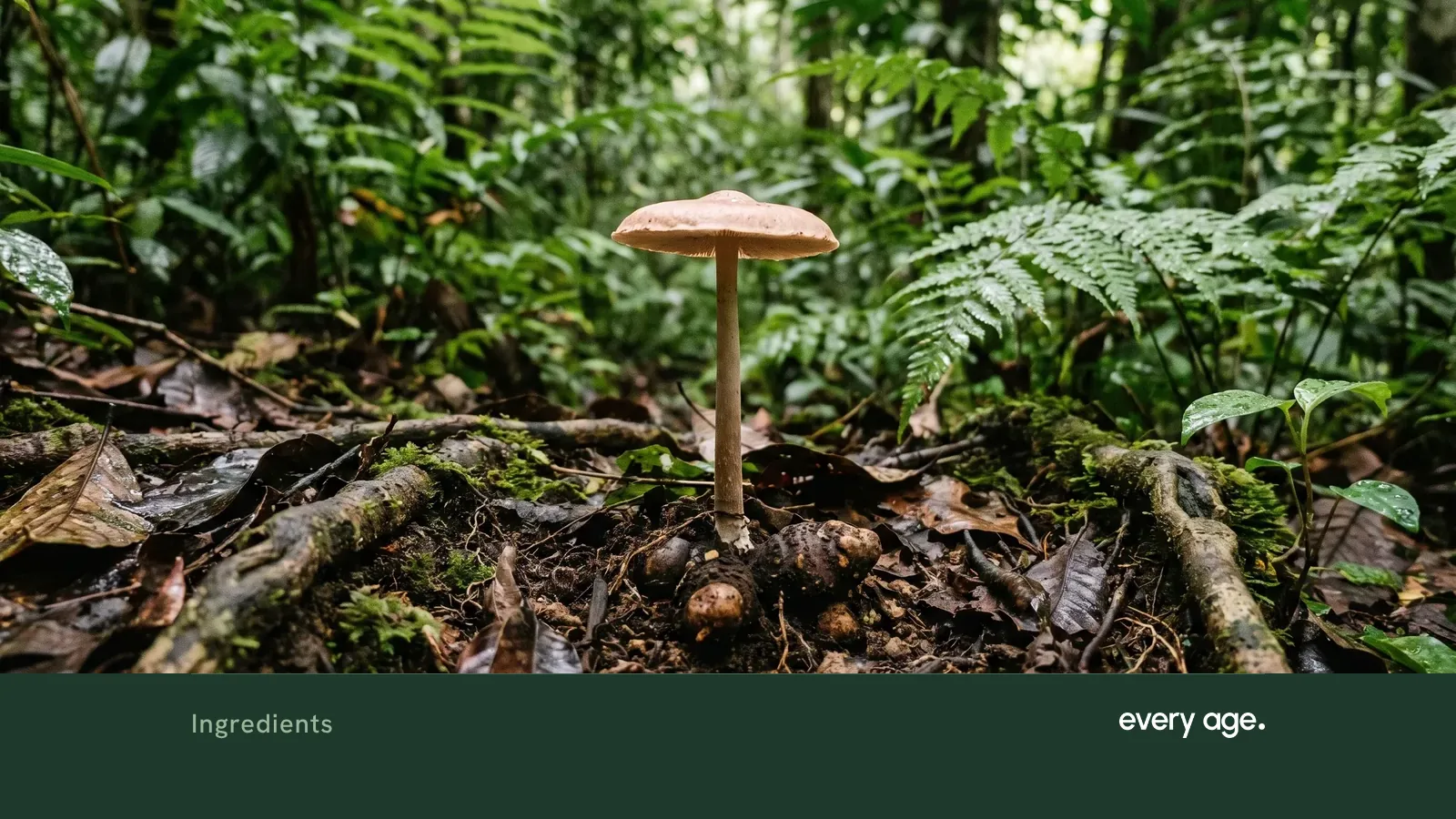
Tiger milk mushroom is the common name of Lignosus rhinocerus (also written *Lignosus rhinocerotis*), a mushroom that grows in the tropical forests of Malaysia and Southeast Asia. In Malay it is cendawan susu rimau, and in Chinese it is often called 虎乳灵芝.
Malay folklore says the mushroom grows where milk from a nursing tigress fell to the ground, which is how it got its name.
The part people use is not the cap but the sclerotium: a hard, tuber-like mass under the soil where the mushroom stores its food. Wild sclerotia are hard to find, so almost every tiger milk mushroom supplement today uses cultivated mushroom.
Tiger milk mushroom at a glance
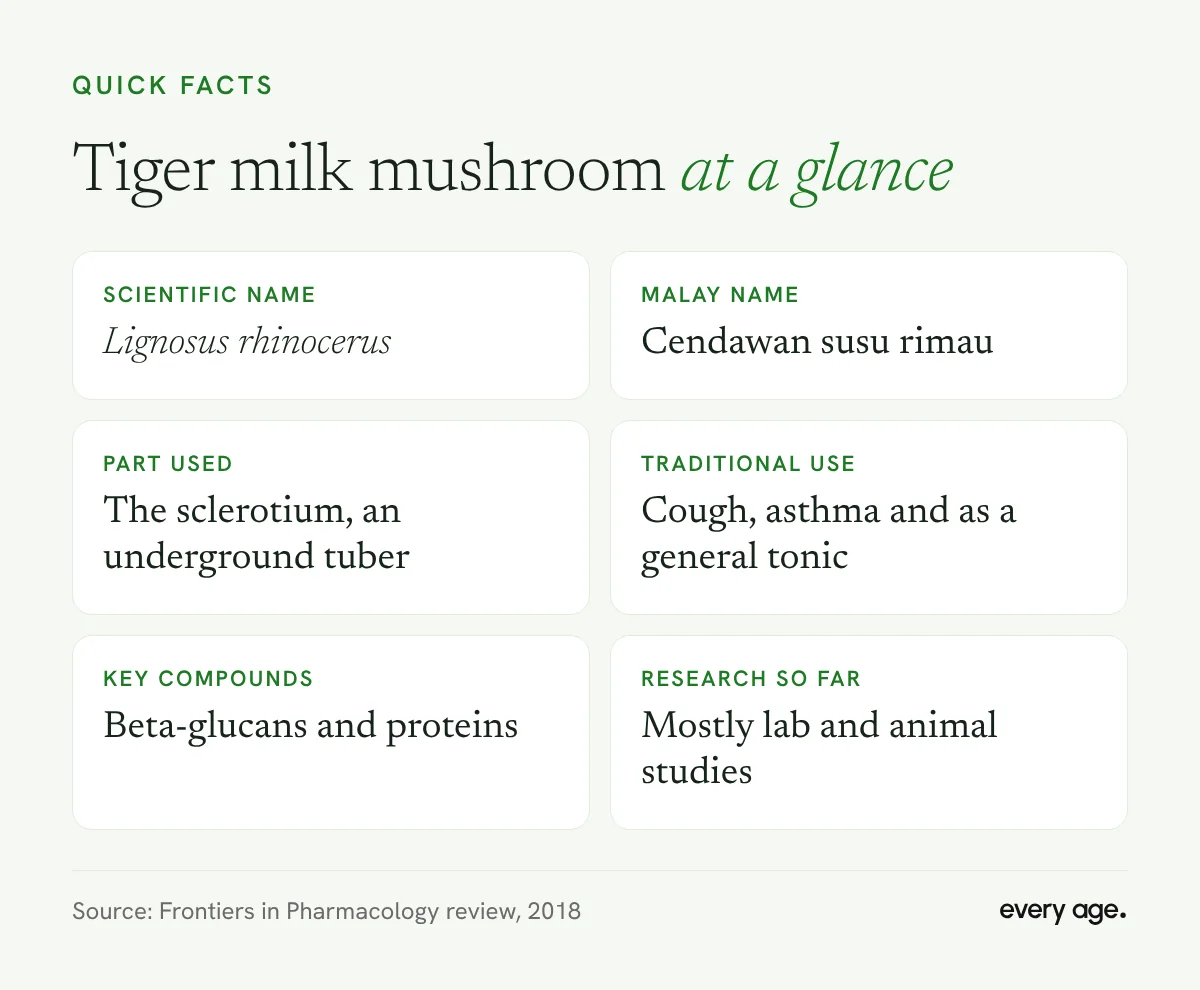
- Scientific name: Lignosus rhinocerus
- Malay name: cendawan susu rimau
- Part used: the sclerotium, an underground tuber
- Traditional use: cough, asthma and as a general tonic
- Key compounds: beta-glucans and proteins
- Research so far: mostly lab and animal studies
Traditional uses in Malaysia
A 2018 review in Frontiers in Pharmacology describes how indigenous groups such as the Semai, Temuan and Jakun have used the sclerotium. It is pounded into juice, boiled into a drink or eaten with betel leaves.
- Cough, asthma and sore throat
- A general tonic, and to nurse women after childbirth
- Food poisoning and joint pain
- To stave off hunger on long trips into the forest
What is inside the sclerotium?
The sclerotium is rich in polysaccharides, mainly beta-glucans, and in proteins such as lectins and immune-modulating fungal proteins. It also contains antioxidant enzymes and fatty acids.
The same review is frank that the active molecules are not yet well characterised. Researchers know which groups of compounds are there, but not exactly which ones do what in the body. Be careful with any product that claims more certainty than that.
What the research shows, and what it does not
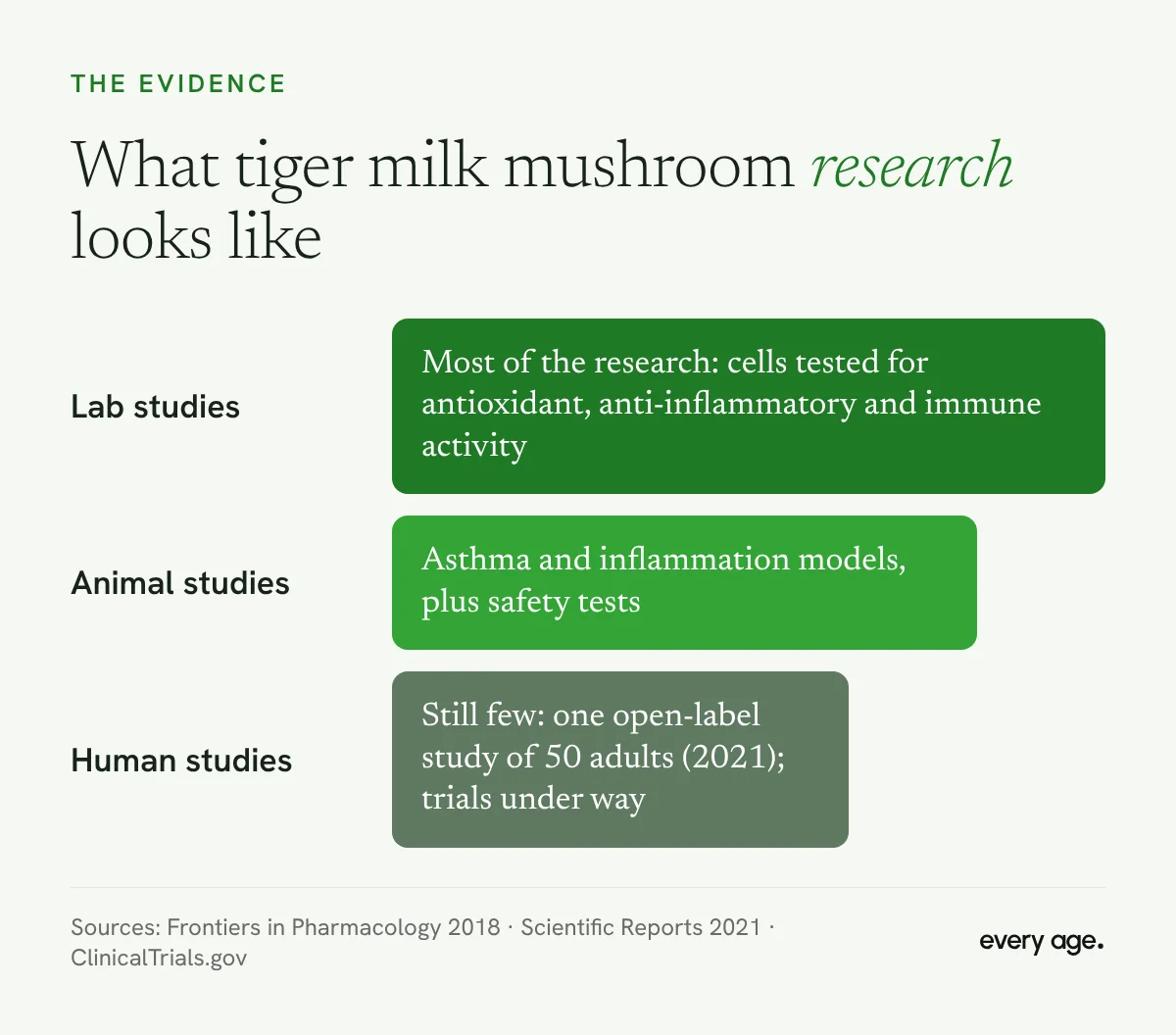
Tiger milk mushroom is one of the better-studied Malaysian mushrooms, but most of the work is early:
- Lab studies (most of the research): cells tested for antioxidant, anti-inflammatory and immune activity
- Animal studies: asthma and inflammation models, plus safety tests
- Human studies (still few): a 2021 open-label study in 50 healthy adults aged 30–50 who took 300 mg twice a day for three months reported better lung-function and nasal-symptom scores and higher saliva IgA. It had no placebo group, so the results need confirming
- Trials under way: registered studies are looking at asthma and at children’s immune function
So what can it do?
Put simply: tiger milk mushroom may support respiratory and immune health as part of a daily routine. It is a food supplement, not a medicine, and it does not treat asthma, infections or any disease. That is why we never promise results, and why individual experiences vary.
Wild or cultivated?
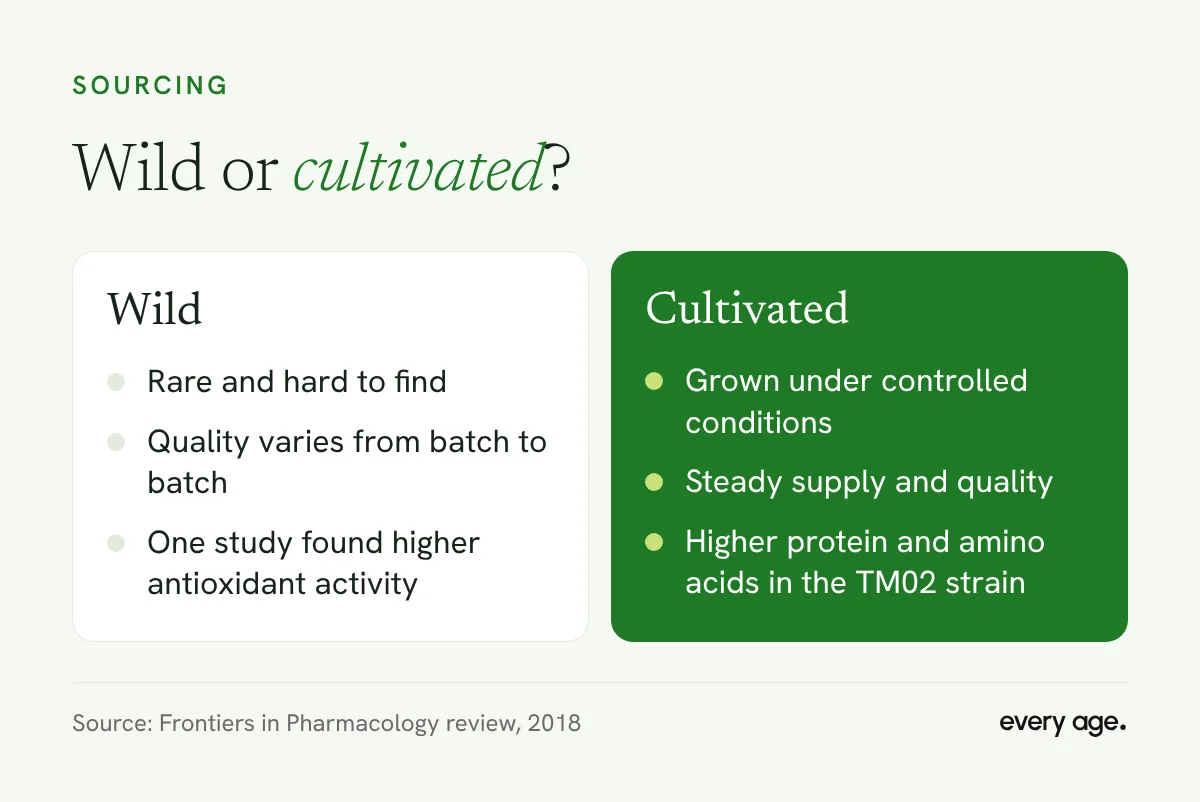
Wild tiger milk mushroom is rare and hard to collect, and quality varies from one find to the next. Malaysian researchers solved the supply problem by cultivating it; a widely used strain is known as TM02.
The review notes that cultivated TM02 had about 3.6 times more protein and 4 times more essential amino acids than a wild sample, while one study found the wild strain had higher antioxidant activity. Neither is simply “better”: cultivation brings steady supply, hygiene and consistent quality, which matters when you take something every day.
Drink, capsule or powder: which form?
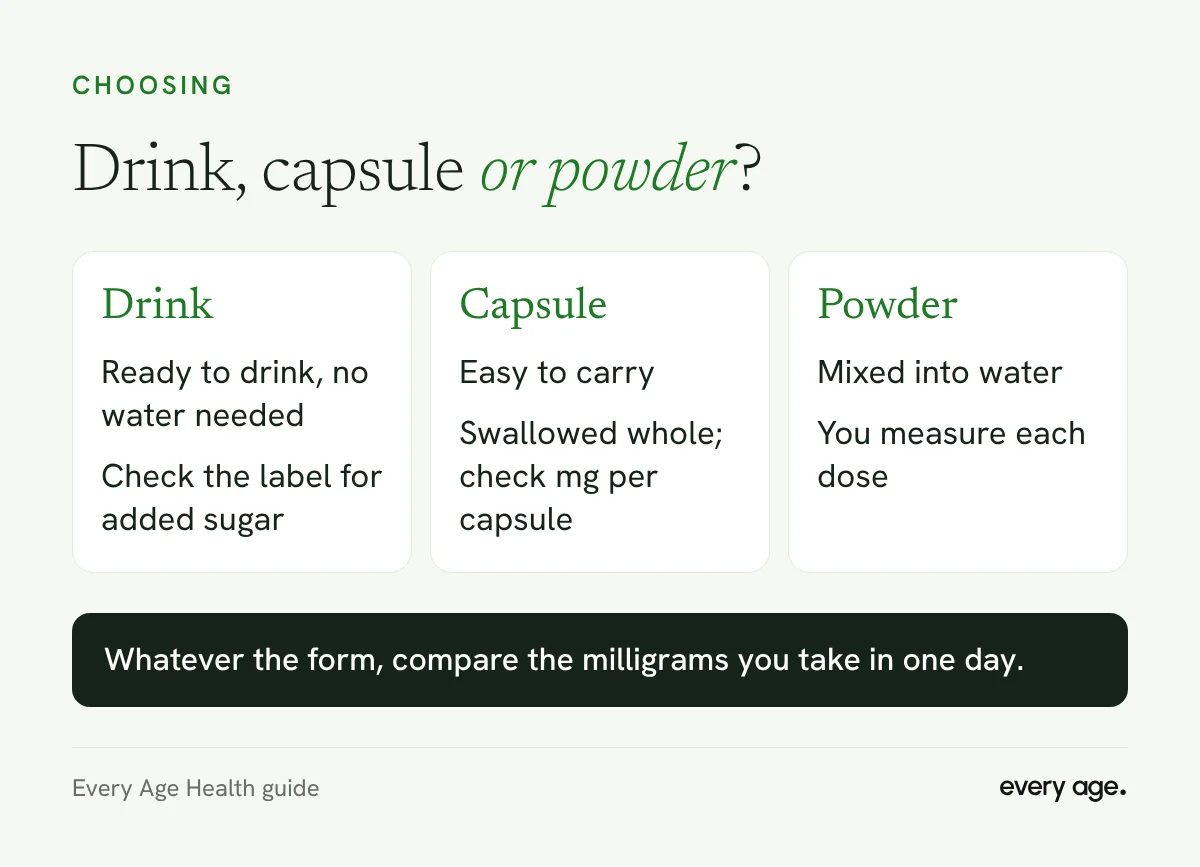
The best form is the one you will take every day. Whichever you choose, check:
- Milligrams per day: labels list amounts per capsule, sachet or scoop, so work out what you take in one day
- Cultivated sclerotium: the label should say what part and source it uses
- Other ingredients: drinks may add fruit, sugar or herbs; capsules may add fillers
- Who sells it: buy sealed stock from an authorised seller
Is tiger milk mushroom safe?
In animal studies, the cultivated sclerotium showed no adverse effects in sub-acute and chronic toxicity tests, no genetic toxicity, and no effect on fertility at the doses tested. Human safety data are more limited.
Most people notice nothing when they start; a few notice more phlegm in the first days. Ask a doctor first if you are pregnant or breastfeeding, give it to a child, have a long-term condition or take regular medicine, and keep taking any asthma medication you were prescribed.
Tiger Milk King: our tiger milk mushroom drink
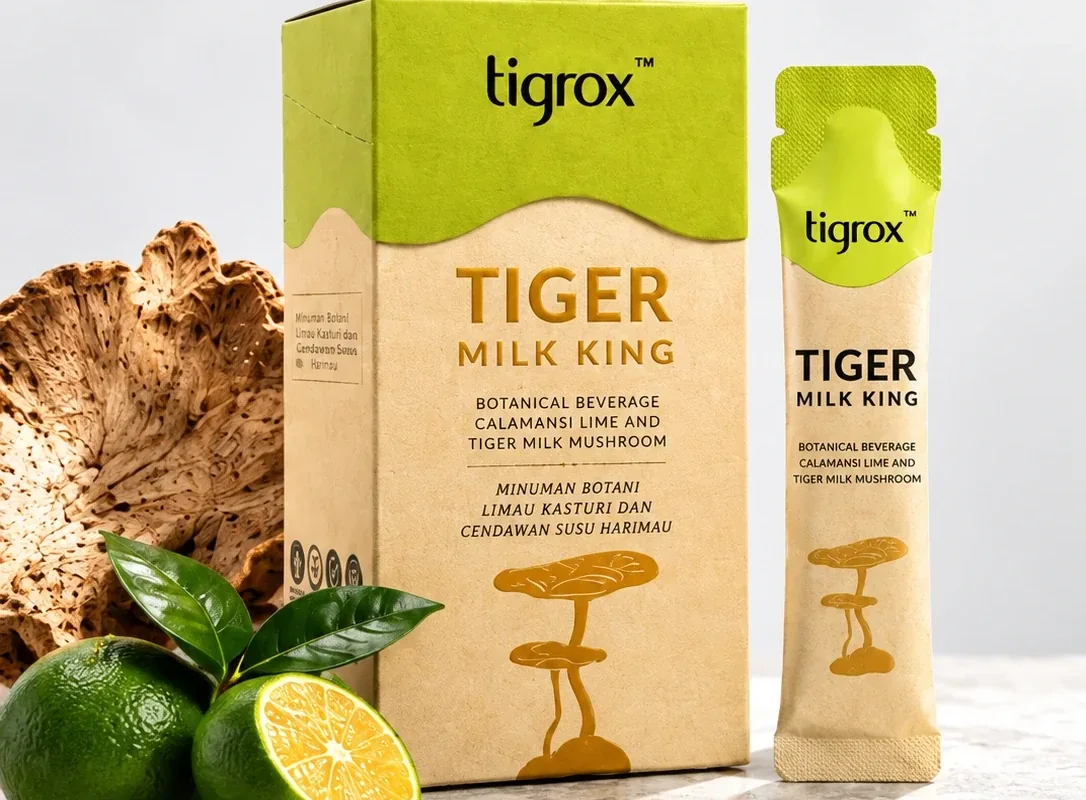
Tigrox Tiger Milk King is a ready-to-drink 20 ml sachet with 625 mg of cultivated tiger milk mushroom, licorice and 50 mg of vitamin C. You take one sachet a day, preferably after breakfast. One box of 20 sachets is S$110.
See the full details on the Tiger Milk King product page.
More in this guide
Frequently asked questions
What is tiger milk mushroom?
Tiger milk mushroom (Lignosus rhinocerus, in Malay cendawan susu rimau) is a rare mushroom from the Malaysian rainforest. The part used is the sclerotium, a tuber that grows underground.
What is tiger milk mushroom good for?
It has traditionally been used for coughs, asthma and as a general tonic. Today people take it to support respiratory and immune health. Most research is still in the lab and in animals, so it is a supplement, not a treatment.
Is tiger milk mushroom the same as lingzhi?
No. Tiger milk mushroom is Lignosus rhinocerus and uses the underground sclerotium; lingzhi (reishi) is Ganoderma and uses the fruiting body, spores or mycelium. They contain different compounds.
Is wild tiger milk mushroom better than cultivated?
Not simply. Cultivated tiger milk mushroom gives steady supply and consistent quality, and one cultivated strain had more protein than a wild sample, while one study found wild had higher antioxidant activity.
Is tiger milk mushroom safe with medication?
No interaction between tiger milk mushroom and medication has been reported so far. We still recommend taking them at least 2 hours apart, and asthma patients should keep taking the medication their doctor prescribed.
Can children take tiger milk mushroom?
Tiger Milk King is suitable for children aged 6 and above, at 1 sachet a day. Pregnant or breastfeeding mothers should consult their doctor first.
Products in this article
-
Tigrox
Tiger Milk King
A Tiger Milk Mushroom tonic that supports lung and respiratory health.
View product → -
Tigrox
Tigrox Imuglo
An elderberry and vitamin C drink for everyday immune support.
View product → -
Tigrox
Tigrox Homega
A fish oil softgel with vitamins K2 and D3 for heart and brain health.
View product → -
Tigrox
Tigrox Livetal
An antrodia cinnamomea drink that supports healthy liver function.
View product →
Keep reading
Sources
- Nallathamby N. et al. A status review of the bioactive activities of tiger milk mushroom Lignosus rhinocerotis. Frontiers in Pharmacology, 2018
- Tan E.S.S. et al. Effect of tiger milk mushroom supplementation on respiratory health, immunity and antioxidant status: an open-label prospective study. Scientific Reports, 2021
- ClinicalTrials.gov: Lignosus rhinoceros TM02 as a complementary therapy for uncontrolled asthma (NCT06451328)
- ClinicalTrials.gov: Effects of TM02 supplementation on immune function in children (NCT07853573)
- Tiger Milk King product information (Wellous Tigrox)
This article is general information, not medical advice. Wellous products are functional foods and supplements, not medicines. Consult your doctor if you are pregnant, nursing, take medication or have a medical condition.
All articles