Ingredients
Tiger milk mushroom vs lingzhi (reishi): not the same mushroom
Two different species, two different parts, and what the research does and does not show. How to read a mushroom supplement label in Singapore.
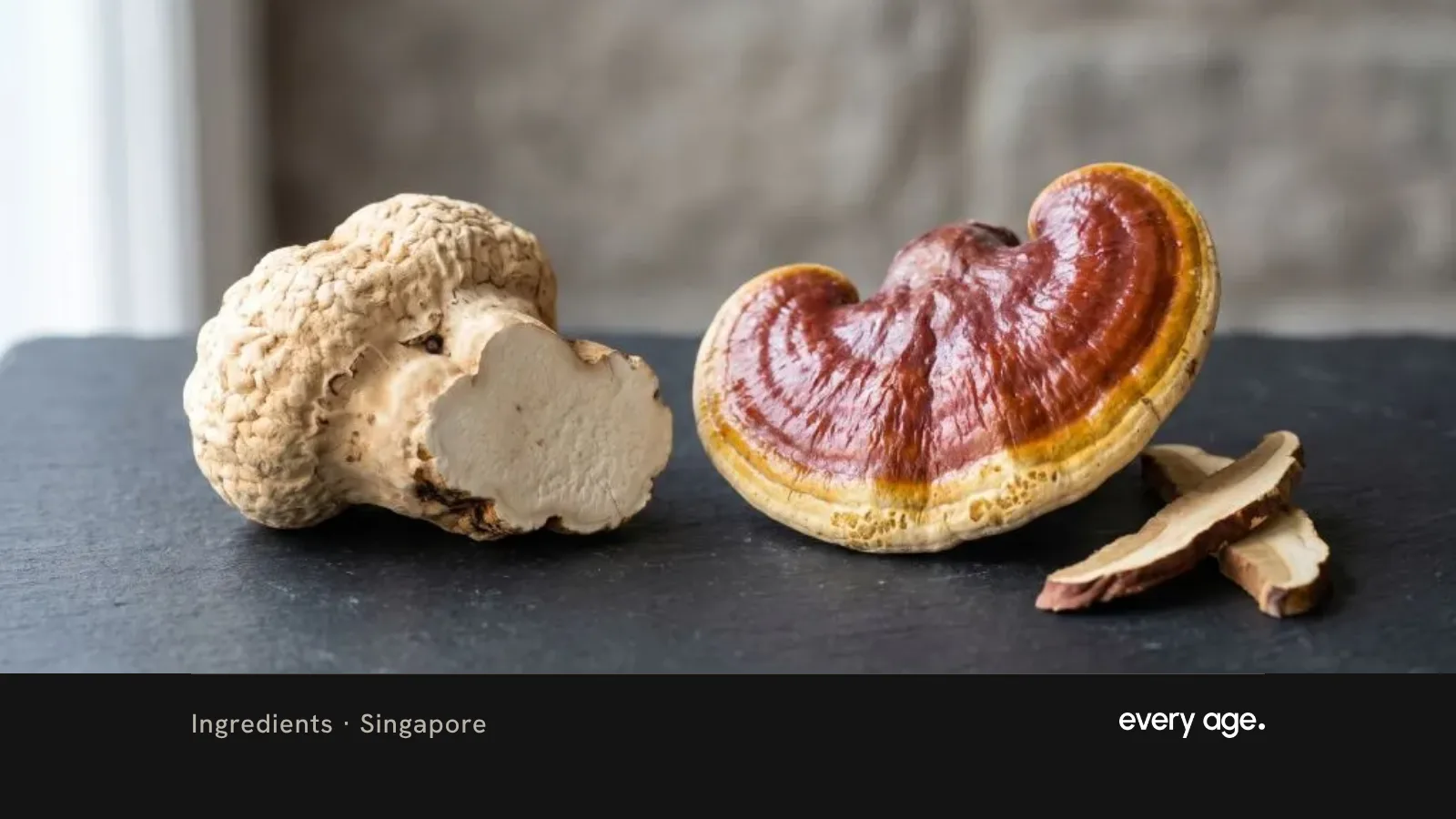
Two different mushrooms with similar-sounding names
Searching for “lingzhi” in Singapore often brings up a restaurant before it brings up a supplement, and “lingzhi” is also used loosely for any medicinal mushroom. In fact there are two separate species on supplement shelves here.
Lingzhi, also sold as reishi, is Ganoderma lucidum: a glossy, kidney-shaped, red-brown mushroom that grows on wood. Tiger milk mushroom is Lignosus rhinocerotis (the older spelling Lignosus rhinocerus is still common on labels): a polypore from Malaysia and other parts of Southeast Asia, named after the story of a tigress dripping milk where it grows.
Which part of the mushroom is used
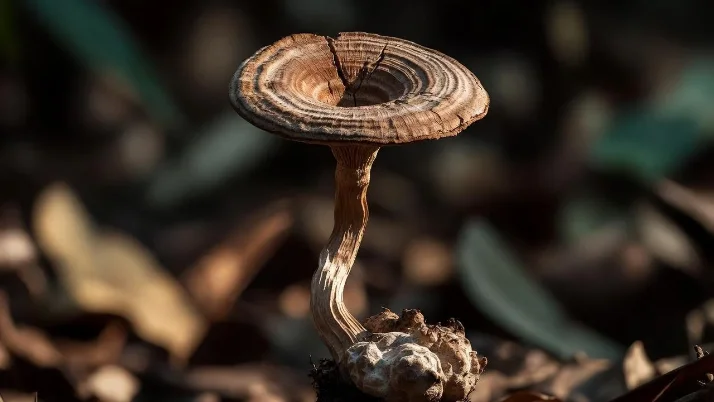
The part matters as much as the name, because each part has a different make-up.
- Tiger milk mushroom: the sclerotium, a hard, tuber-like mass under the ground. A 2017 review in Frontiers in Pharmacology notes that native communities in Malaysia have traditionally used it to stave off hunger, to ease cough and asthma, and for stamina. Wild sclerotia are rare, so supplements usually use cultivated material.
- Lingzhi: the fruiting body (the visible mushroom), the spores, or the mycelium (the root-like network). Their compounds differ; a 2023 review in the Journal of Primary Health Care notes that some compounds are found only in the spores.
- Both contain polysaccharides such as beta-glucans. Lingzhi is also known for triterpenoids (ganoderic acids).
What the research does and does not show
Be wary of any page that lists long benefit lists for either mushroom. The reviews are cautious.
For tiger milk mushroom, the Frontiers in Pharmacology review covers lab and animal work on immune, respiratory and other activities, and states there are few validation studies, including human clinical trials, and that the active compounds are not yet adequately validated.
For lingzhi, the Journal of Primary Health Care review concludes there is no definitive evidence of efficacy for any use, and a Cochrane review of five trials found the evidence insufficient. Interest is real, but so is the gap between tradition and proof.
This is why we describe both as ingredients that support everyday wellbeing and do not promise results. Neither is a medicine.
Safety: who should be careful
Both are generally taken as foods, but the same review of lingzhi lists nausea, insomnia and mild stomach upset as reported effects, and isolated cases of liver injury where a cause was not proven. It advises caution for children, pregnant or breastfeeding women and people with autoimmune conditions, and for anyone taking immunosuppressants, anticoagulants, antiplatelets, diabetes or blood-pressure medicines.
For tiger milk mushroom, long-term human safety data are limited. Whichever you choose, ask your doctor or pharmacist first if you take regular medication, are pregnant or breastfeeding, or have a health condition.
How to read a mushroom supplement label
- The Latin name. “Lingzhi”, “reishi” and “tiger milk” are common names; the Latin name tells you which species it really is
- The part used. Sclerotium, fruiting body, spores or mycelium
- The amount per daily serving (not per box), in mg
- The form. Whole powder, an extract, or cracked spores are different products; compare them by serving amount, not by the word “extract”
- Cultivated or wild. Wild tiger milk mushroom is rare; cultivated stock is the practical source
- Who sells it. An authorised seller means sealed, genuine stock you can verify
Where our two products fit
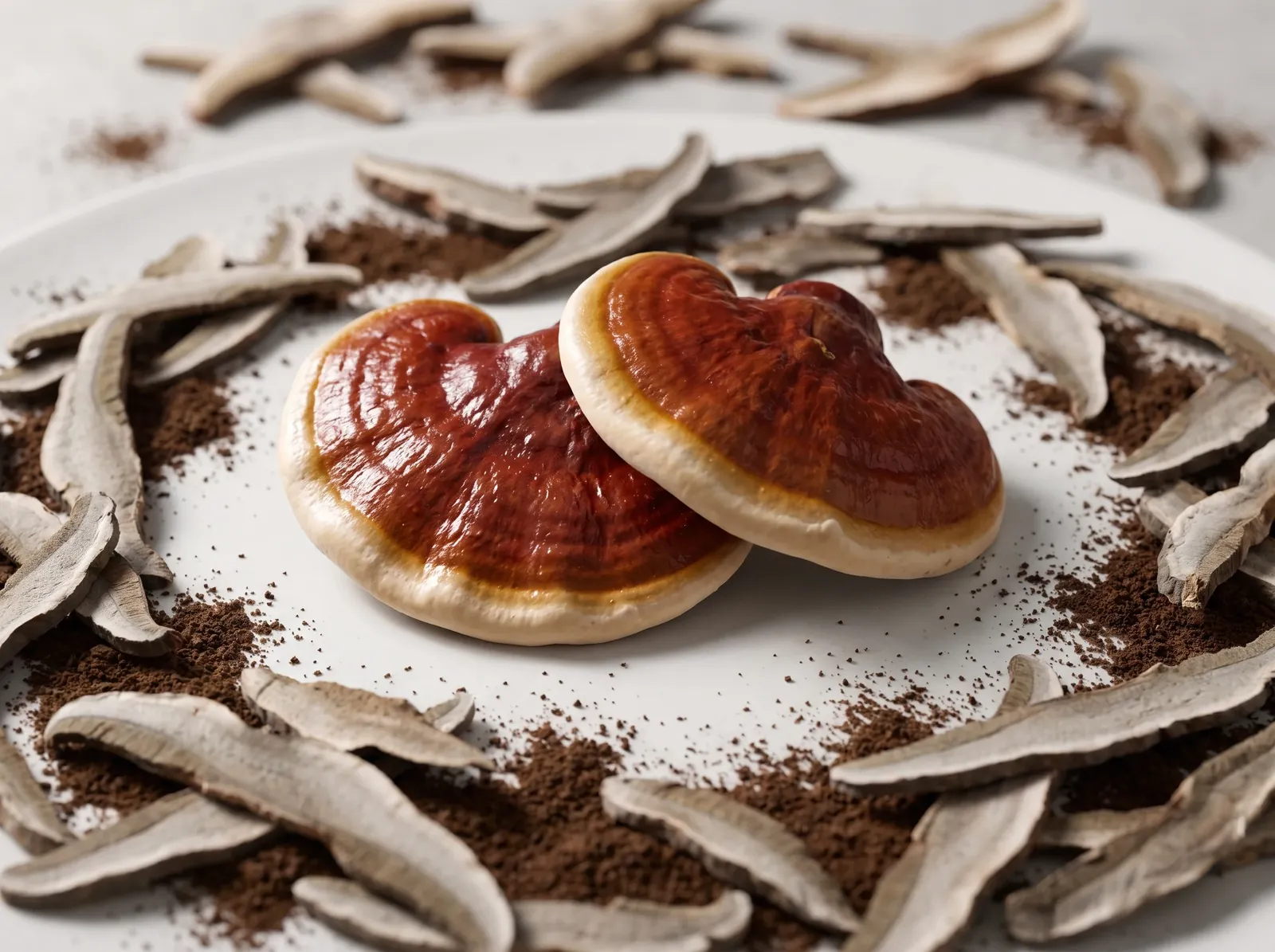
Tiger Milk King (Tigrox) is a daily 20 ml sachet with 625 mg of cultivated tiger milk mushroom (Lignosus rhinocerus), licorice and 50 mg of vitamin C. In Singapore, one box is S$110.
Bio-Lingzhi (Bio Series) is a tablet with 250 mg of whole red reishi, using the fruiting body and the mycelium, from Hokkaido, Japan. In Singapore, one bottle is S$89.
They are different species in different forms, so they are not substitutes for each other. Both are food supplements, not medicines. Every Age Health is an authorised Wellous dealer; orders ship from our Singapore warehouse, sealed and verifiable.
Who reviewed this article
This guide was reviewed by Dr. Phan Chia Wei, Medical Mushroom Expert on the Wellous Medical and Research Board of Advisory (MRBA). For transparency: the MRBA is Wellous’s own advisory board, and Dr. Phan is a co-author of the Frontiers in Pharmacology review cited here. The sources below are independent publications you can read yourself.
Frequently asked questions
Is tiger milk mushroom the same as lingzhi?
No. Tiger milk mushroom is Lignosus rhinocerotis and is used as a sclerotium. Lingzhi, also called reishi, is Ganoderma lucidum and is used as a fruiting body, spores or mycelium.
Which is better, tiger milk mushroom or lingzhi?
Neither is proven better. Published reviews say human evidence is limited for both. Choose by the species, the part used, the amount per daily serving and whether you can take it every day.
Do tiger milk mushroom and lingzhi have side effects?
Reported effects of lingzhi include nausea, insomnia and mild stomach upset, with rare liver cases. Ask your doctor first if you take medication, are pregnant or breastfeeding, or have a health condition.
What does cracked spores mean on a lingzhi label?
Lingzhi spores have a tough shell, and “cracked” spores have had that shell broken open. It is a processing step, not a measure of benefit, so compare products by the amount per serving.
Products in this article
Keep reading
Sources
- Nallathamby et al. (2018), A Status Review of the Bioactive Activities of Tiger Milk Mushroom Lignosus rhinocerotis, Frontiers in Pharmacology
- Milosavljevic & Barnes (2023), Ganoderma lucidum, Journal of Primary Health Care
- Cochrane review: Ganoderma lucidum (Reishi mushroom) for cancer treatment (2016)
- Wellous MRBA: Medical and Research Board of Advisory
- Tiger Milk King product information
- Bio-Lingzhi product information
This article is general information, not medical advice. Wellous products are functional foods and supplements, not medicines. Consult your doctor if you are pregnant, nursing, take medication or have a medical condition.
All articles