Ingredients
Grape seed extract and OPC: what it is and what to look for
Grape seed extract, OPC, grape seed oil and red wine are not the same thing. Here is what each one is, how people use it, and what to check on the label.
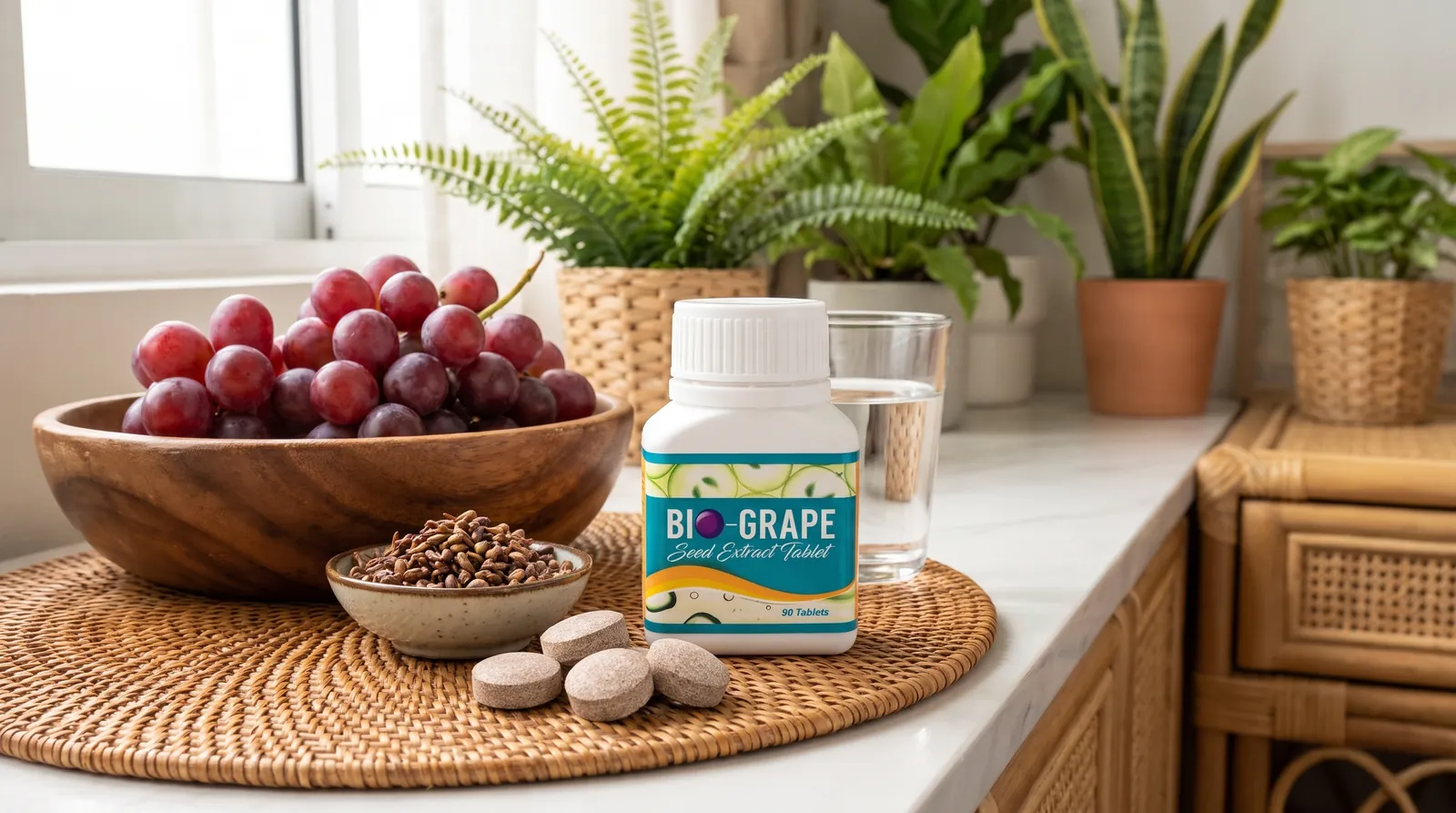
What is grape seed extract?
Grape seed extract is made from the hard seeds inside grapes, usually a by-product of winemaking. The seeds are extracted and standardised to a percentage of OPCs, so each tablet gives a known amount of the active compounds.
The seeds themselves are hard and not digested well, which is why supplements use an extract rather than whole seeds.
What are OPCs?
OPCs (oligomeric proanthocyanidins) are plant polyphenols found in grape seeds and a few other plants such as pine bark. They are antioxidants: they help neutralise free radicals, unstable molecules the body produces naturally and in response to pollution, UV light and stress.
Antioxidants are one part of a healthy routine alongside a balanced diet, sleep and exercise.
What do people take it for?
Most people take grape seed extract as daily antioxidant support. Some also take it as part of a routine for healthy circulation, eyes and skin. Research on grape seed extract is still developing and results vary between studies, so it should be seen as a supplement to a healthy lifestyle, not a treatment for any condition.
Extract, oil, wine and grapes: what is the difference?
- Grape seed extract: a standardised supplement, usually a tablet or capsule, with a stated OPC content
- Grape seed oil: pressed from the seeds and used for cooking or on the skin; it is not a concentrated source of OPCs
- Red wine and grapes: contain polyphenols, but most OPCs stay in the hard seed, so they are not equivalent to an extract
What to check on the label
- OPC percentage, for example 95%, not just the words “grape seed”
- Amount of extract per tablet and how many tablets you take a day
- Grape source and how it was grown or harvested
- Fillers, such as maltodextrin, and added sugar
- Halal status if it matters to you
- Who sells it: an authorised seller means sealed, genuine stock
Bio-Grape Seed
Bio-Grape Seed is a Wellous Bio Series tablet made from French grapes grown in Bordeaux, hand-picked and matured for 456 days, standardised to 95% OPCs. Each tablet has 50 mg of grape seed extract, with no maltodextrin. It is Halal-certified, and one bottle holds 90 tablets.
Take 2 tablets a day with plenty of water, and up to 6 tablets depending on your needs, as directed on the label. At 2 tablets a day, one bottle lasts about 45 days. Individual results vary.
Safety: who should check with a doctor first
- Taking blood thinners such as warfarin, or planning surgery
- Pregnant or breastfeeding
- Have or suspect a medical condition, or take other medication
- Grape seed extract is a health supplement, not a medicine, and does not replace medical care
Buying genuine in Malaysia
Wellous products are sold on many marketplaces. Buy from an authorised Wellous dealer so you receive sealed, genuine stock you can check through Wellous product verification. Every Age Health is an authorised dealer, and Malaysian orders ship from our Malaysian warehouse.
Frequently asked questions
What is the difference between grape seed extract and grape seed oil?
Grape seed extract is a standardised supplement made to give a stated amount of OPCs. Grape seed oil is pressed from the seeds for cooking or skin use and is not a concentrated source of OPCs.
How many Bio-Grape Seed tablets should I take?
Take 2 tablets a day with plenty of water, and up to 6 tablets depending on your needs, as directed on the label. One bottle has 90 tablets.
Can I take grape seed extract with blood thinners?
Ask your doctor first. People on blood thinners such as warfarin, and anyone planning surgery, should check before taking grape seed extract.
Is Bio-Grape Seed Halal?
Yes. Bio-Grape Seed is a Halal-certified, plant-based grape seed extract tablet.
Products in this article
Keep reading
Sources
This article is general information, not medical advice. Wellous products are functional foods and supplements, not medicines. Consult your doctor if you are pregnant, nursing, take medication or have a medical condition.
All articles